


Why the Future of Industrial Innovation Is Replicable, Not Experimental
When innovation is measured by experiments
For decades, industrial innovation has been closely associated with experimentation. Pilot projects and proof-of-concept installations have been used to demonstrate that new technologies can perform under controlled conditions. Success was often defined by a single question: does it work?
Today, that definition is no longer sufficient. Studies across energy and industrial infrastructure projects show that a significant share of innovations never move beyond the pilot stage, not because they fail technically, but because they were not designed to be repeated at scale. Proving functionality is not the same as enabling growth.
When the pilot becomes the end goal
The pilot itself is not the problem. The issue arises when the pilot becomes the destination. When each new facility is treated as a unique case, requiring new assumptions, new designs, and new operating logic, growth turns into accumulated complexity rather than accumulated value.
The European Commission has highlighted that projects lacking built-in replicability experience higher costs, longer delivery timelines and increased operational risk with each new implementation (European Commission, 2017). A successful first installation does not automatically translate into sustainable expansion.
The European Commission has highlighted that projects lacking built-in replicability face higher costs, longer delivery timelines, and increased operational risk with each new implementation. A successful first installation does not automatically translate into sustainable expansion
From “Does it work?” to “Can it work again?”
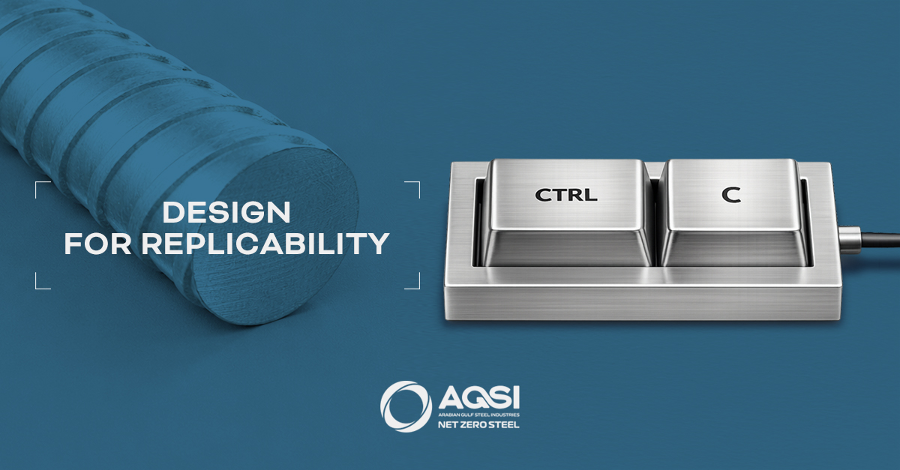
The question therefore shifts, from whether a solution works once, to whether it can work again, with predictability, control, and without fundamental redesign.
Research on large-scale infrastructure projects identifies replicability as a key indicator of industrial maturity. A solution is considered ready for broader adoption only when it can be transferred beyond its original context while maintaining performance. Its value is ultimately proven in subsequent implementations.
Evidence from Horizon 2020 projects further shows that solutions without a transferable operating model tend to repeat pilots rather than scale outcomes, adding uncertainty and reducing investment efficiency. Scaling is not a by-product of success; it is a design decision.
Replicability is not only a technological issue, It is also organizational. Research on scaling shows that sustainable growth depends on stable operating and governance models that enable knowledge to be transferred systematically, rather than remaining local and fragmented.
Without structure, innovation depends on individuals and one-off decisions. With structure, it becomes a repeatable growth mechanism.
How AGSI applies replicability in practice
Within this context, Arabian Gulf Steel Industries (AGSI) exemplifies an industrial approach built on operational replicability rather than experimentation.
AGSI has developed a carbon-neutral steel production facility in Abu Dhabi, based on 100% locally sourced recycled raw materials and electric induction furnace technology. This model was not conceived as a pilot, but as a fully operational industrial system designed for consistent output and long-term performance.
The company’s strategy integrates circular economy principles and low-carbon production into its core operating model, supported by mature, industrially proven technologies that enable predictable cost structures, consistent quality and alignment with increasingly stringent ESG requirements. Sustainability is therefore not treated as an experimental layer, but as an operational standard.
The achievement of carbon neutrality at AGSI’s Abu Dhabi plant, independently verified, is not positioned as a one-off milestone, but as evidence that the production system itself is designed to operate reliably within a fully operational industrial setting. Innovation is therefore built into the operating model itself, rather than developed in parallel as isolated pilot initiatives.
This approach aligns with international guidance that identifies replicability as a critical factor for reducing investment risk and supporting long-term industrial viability.
The shift the Industry can no longer ignore
The future of industrial innovation does not lie in more experiments. It lies in models that can be applied repeatedly, with consistent performance and controlled risk. True innovation is not about proving that something works once. It is about making it work reliably, again and again, in real operating conditions.
References
AIOTI. (2023). Replicability and Scalability Assessment Tool – White Paper. Alliance for Internet of Things Innovation.
Elsevier. (2024). Organizational Scaling, Scalability and Scale-up. ScienceDirect.
European Commission. (2017). Scalability, Replicability and Modularity in Innovation Projects. Directorate-General for Research & Innovation.
Fastmarkets. (2023). UAE demand for low-carbon steel rises as regulators tighten standards – AGSI.
FEVER H2020 Consortium. (2021). Scalability and Replicability Analysis – Deliverable D8.7. Horizon 2020 Programme.
MDPI – Energies. (2022). Scalability and Replicability for Smart Grid Innovation Projects. Energies, 15(13).
WAM – Emirates News Agency. (2023). Arabian Gulf Steel Industries achieves net-zero emissions at Abu Dhabi plant.